
Could The Baltimore Bridge Accident Have been prevented?
The NTSB report into the Dali and Francis Scott Key Bridge accident highlights how one small electrical fault became a catastrophic failure chain. It raises bigger questions around critical systems, inspection quality, and whether maritime maintenance is doing enough to surface risks before they become emergencies.
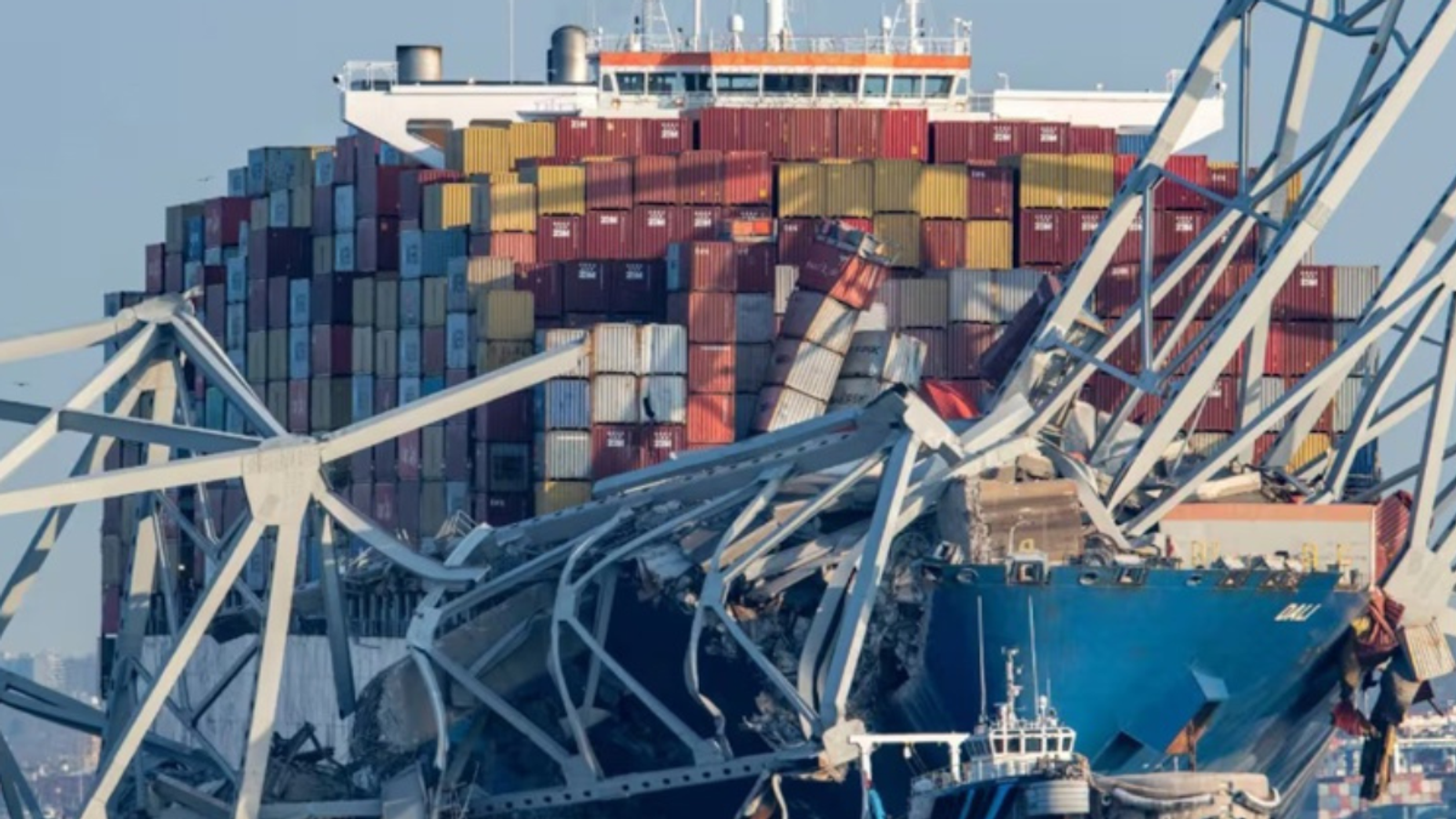
On 18 November 2025, the National Transportation Safety Board released its final report into the Dali’s contact with the Francis Scott Key Bridge in Baltimore.
The accident happened on 26 March 2024, when the 984-foot container ship Dali lost electrical power while leaving Baltimore Harbor. The blackout resulted in the loss of propulsion and steering, and the vessel struck Pier 17 of the bridge. A section of the bridge collapsed, killing six highway workers.
The report’s finding is direct and uncomfortable. The NTSB found that the probable cause of the accident was a loss of electrical power caused by a loose signal wire connection in a terminal block. That loose connection stemmed from improper installation of wire-label banding, which prevented the wire from being properly seated. The resulting blackout left the vessel without propulsion and steering close to the bridge, with almost no time left to recover.
So when we ask whether the Baltimore Bridge accident could have been prevented, the honest answer is this: not every accident can be predicted, but the maintenance and inspection conditions that allow small technical failures to become major casualties need to be challenged.
From an engineering point of view, this is the part that should make the industry uncomfortable.
A single loose wire sounds small. It sounds like the type of fault that can happen anywhere. But on a vessel, there is no such thing as a small fault when it sits inside a critical system, in the wrong operating condition, at the wrong moment.
The wire itself did not collapse the bridge. The wire was the start of the chain.
Electrical power was lost. Propulsion and steering were lost. The vessel was close to critical infrastructure. The time available to recover was extremely short. Once those factors lined up, the consequence became enormous.
This is how most serious maritime incidents unfold. They rarely come from one dramatic failure. They come from a chain of ordinary weaknesses that are allowed to line up.
A loose wire. A breaker trip. A pump that does not start when it should. A power management issue. A cooling water leak. A fuel supply problem. An alarm that has been normalised. A maintenance defect that has sat open too long. A procedure that exists, but is not familiar under pressure.
On paper, each item might look manageable. In the real world, one small fault can remove redundancy, reduce response time, and turn a recoverable problem into a casualty.
That is why the Dali incident should not be viewed only as a bridge accident. It is also a vessel reliability and maintenance warning.
Large commercial vessels are complex systems. Electrical distribution, propulsion control, steering, generators, automation, fuel systems, cooling systems, alarms, emergency power and bridge systems all depend on each other. When one system fails, the real risk is often not the first failure. It is what that failure prevents the crew from doing next.
In restricted waters, that matters even more.
A vessel can have hours to recover from a technical issue in open water. Near a bridge, berth, reef, harbour entrance or lee shore, the recovery window can shrink to minutes or seconds. That changes the risk completely.
This is why critical systems need more than routine maintenance. They need risk-based attention.
It is not enough to know that something was inspected at some point. The question is whether the inspection was good enough to identify the actual failure mode. It is not enough to know that a component exists in the maintenance system. The question is whether its condition, installation quality, history, criticality and consequence of failure are understood.
For electrical systems, this becomes especially difficult. A loose connection, intermittent fault, poor termination, heat damage, vibration issue or control fault may not announce itself clearly. It may appear occasionally, disappear, and return later under load or vibration. It may create small anomalies before it creates a major failure.
That is exactly where modern maintenance needs to improve.
The industry still relies heavily on manual inspections, scheduled tasks, crew experience and reactive correction. These things matter, but they are not enough on their own. Modern vessels generate data all the time. They produce alarms, breaker events, voltage changes, power fluctuations, operating logs, defect reports, maintenance notes and machinery trends.
The question is whether anyone is reading those signals together.
A single alarm might not mean much. A one-off trip might be reset and forgotten. A minor defect might not look urgent. But when events repeat, when they appear in the same system, when they affect a critical function, or when they occur before high-risk operations, the risk profile changes.
That is where predictive maintenance and decision support can help.
Not by pretending every accident can be stopped. Not by replacing engineers. And not by claiming software can see everything.
But by making weak signals visible earlier.
A good system should help an operator understand which components and systems are most critical, which defects have the highest consequence, which alarms are repeating, which equipment is drifting from normal behaviour, and which risks should be dealt with before the vessel enters a high-consequence operating phase.
For a vessel leaving port, approaching a bridge, manoeuvring in confined waters, operating in heavy weather, or carrying passengers, the risk threshold should be different.
The maintenance system should know that.
The engineering team should not have to mentally connect every dot from memory. The system should support them by bringing the right information forward at the right time.
That is the shift maritime needs.
From maintenance records to maintenance intelligence.
From “the job is in the system” to “this risk is becoming operational”.
From reactive fixes to early intervention.
From isolated defects to connected risk.
The Dali accident shows how quickly a technical failure can become something much bigger than a technical failure. Once propulsion and steering were lost close to the bridge, the incident moved beyond the engine room. It became a navigational emergency, an infrastructure disaster, and a human tragedy.
That is the uncomfortable lesson.
A small failure is only small until it occurs in the wrong place, at the wrong time, with too little room left to recover.
So, could the Baltimore Bridge accident have been prevented?
Maybe the better question is this:
How many small faults are sitting inside vessels today, waiting for the wrong operating condition to become something much bigger?
Author – Ken Sinclair